Multideteção de antibióticos em alimentos para animais de produção
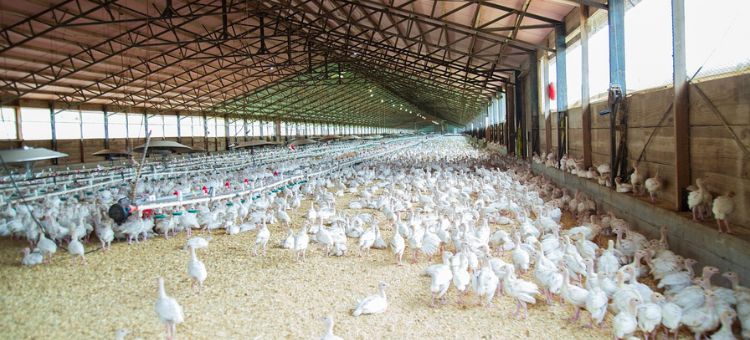
FOTO TWINQUINN84/ PIXABAY
A crescente procura por produtos alimentares de origem animal resulta no aumento da produção animal intensiva.
Este sistema de produção é associado a impactes ambientais significativos e ao uso inadequado de promotores de crescimento, especialmente antibióticos. Esse uso indevido pode contribuir para o aumento das resistências antimicrobianas, o que representa uma ameaça à saúde pública. A utilização imprópria de medicamentos veterinários na ração para animais pode comprometer a segurança dos alimentos de origem animal. Por conseguinte, é crucial estabelecer controlos para garantir que os alimentos para animais cumprem os requisitos da Comunidade Europeia. De acordo com o Regulamento de Execução (UE) 2021/808, todas as análises por espectrometria de massa devem ser combinadas com técnicas de separação que garantam um poder de separação e seletividade adequados, como o UHPLC-MS/MS e o UHPLC-ToF-MS, essenciais para a deteção e confirmação precisa destas substâncias.
The growing demand for animal products has led to an increase in intensive animal production. This production system is associated with significant environmental impacts and the inappropriate use of growth promoters, especially antibiotics. This misuse contributes to increased antimicrobial resistance, which poses a threat to public health. The improper use of veterinary medicines in animal feed can compromise the safety of food of animal origin and consequently poses a risk to humans. It is therefore crucial to establish controls to ensure that animal feed complies with European Community requirements. According to the Commission Implementing Regulation (EU) 2021/808, all mass spectrometry analyses must be combined with separation techniques that ensure adequate separation power and selectivity, such as UHPLC-MS/MS and UHPLC-ToF-MS, which are essential for accurate detection and confirmation of those substances.
Nos últimos anos, os países em desenvolvimento têm apresentado um aumento no poder de compra e na procura global por alimentos de origem animal, favorecendo a produção animal intensiva. Neste sistema de produção intensivo a utilização de antibióticos para fins de prevenção, terapêutica e indevidamente como promotores de crescimento, suscita uma grande preocupação global. Os promotores de crescimento antimicrobianos, são utilizados em baixas concentrações e administrados oralmente através das rações. Estas concentrações são insuficientes para eliminar completamente os agentes patogénicos, mas suficientes para aumentar a pressão seletiva e favorecer a transmissão de bactérias resistentes, as quais, podem ser transmitidas a outros animais, ambiente e aos seres humanos (...)
Leia o artigo completo na TecnoAlimentar nº 46, janeiro/ março 2026
Referências
[1] Abd El-Hack, M. E., El-Saadony, M. T., Elbestawy, A. R., El-Shall, N. A., Saad, A. M., Salem, H. M., El-Tahan, A. M., Khafaga, A. F., Taha, A. E., AbuQamar, S. F., & El-Tarabily, K. A. (2022). Necrotic enteritis in broiler chickens: disease characteristics and prevention using organic antibiotic alternatives – a comprehensive review. In Poultry Science (Vol. 101, Issue 2). Elsevier Inc. https://doi.org/10.1016/j.psj.2021.101590
[2] Arsène, M. M. J., Davares, A. K. L., Viktorovna, P. I., Andreevna, S. L., Sarra, S., Khelifi, I., & Sergueïevna, D. M. (2022). The public health issue of antibiotic residues in food and feed: Causes, consequences, and potential solutions. In Veterinary World (Vol. 15, Issue 3, pp. 662–671). Veterinary World. https://doi.org/10.14202/vetworld.2022.662-671
[3] Atta, A. H., Atta, S. A., Nasr, S. M., & Mouneir, S. M. (2022). Current perspective on veterinary drug and chemical residues in food of animal origin. In Environmental Science and Pollution Research (Vol. 29, Issue 11, pp. 15282–15302). Springer Science and Business Media Deutschland GmbH. https://doi.org/10.1007/s11356-021-18239-y
[4] Bacanli, M., & Basaran, N. (2019). Importance of antibiotic residues in animal food. In Food and Chemical Toxicology (Vol. 125, pp. 462–466). Elsevier Ltd. https://doi.org/10.1016/j.fct.2019.01.033
[5] Boscher, A., Guignard, C., Pellet, T., Hoffmann, L., & Bohn, T. (2010). Development of a multi-class method for the quantification of veterinary drug residues in feedingstuffs by liquid chromatography-tandem mass spectrometry. Journal of Chromatography A, 1217(41), 6394–6404. https://doi.org/10.1016/j.chroma.2010.08.024
[6] Brown, K., Uwiera, R. R. E., Kalmokoff, M. L., Brooks, S. P. J., & Inglis, G. D. (2017). Antimicrobial growth promoter use in livestock: a requirement to understand their modes of action to develop effective alternatives. In International Journal of Antimicrobial Agents (Vol. 49, Issue 1, pp. 12–24). Elsevier B.V. https://doi.org/10.1016/j.ijantimicag.2016.08.006
[7] De Baere, S., & De Backer, P. (2007). Quantitative determination of amoxicillin in animal feed using liquid chromatography with tandem mass spectrometric detection. Analytica Chimica Acta, 586(1-2 SPEC. ISS.), 319–325. https://doi.org/10.1016/j.aca.2006.10.036
[8] Economou, V., & Gousia, P. (2015). Agriculture and food animals as a source of antimicrobial-resistant bacteria. In Infection and Drug Resistance (Vol. 8, pp. 49–61). Dove Medical Press Ltd. https://doi.org/10.2147/IDR.S55778
[9] Freitas, A., Sofia, A., Pouca, V., Magalhães, D., Gamboa-Cruz, C., Barros, S., Barbosa, J., & Ramos, F. (2020). Development and Validation of a Multi-detection Confirmatory Method for Antibiotics Determination in Piglet Kidneys by UHPLC-TOF-MS According Commission Decision 2002/657/EC. Food Analytical Methods. https://doi.org/10.1007/s12161-020-01916-y/Published
[10] Gaugain, M., Fourmond, M. P., Fuselier, R., Verdon, E., Roudaut, B., & Pessel, D. (2020). Control of Antimicrobials in Feed Using Liquid Chromatography-Tandem Mass Spectrometry: Assessment of Cross-Contamination Rates at the Farm Level. Journal of Agricultural and Food Chemistry, 68(34), 9033–9042. https://doi.org/10.1021/acs.jafc.0c02999
[11] Gaugain, M., Raynaud, A., Bourcier, S., Verdon, E., & Hurtaud-Pessel, D. (2021). Development of a liquid chromatography-tandem mass spectrometry method to determine colistin, bacitracin and virginiamycin M1 at cross-contamination levels in animal feed. Food Additives and Contaminants - Part A Chemistry, Analysis, Control, Exposure and Risk Assessment, 38(9), 1481–1494. https://doi.org/10.1080/19440049.2021.1922760
[12] Gavilán, R. E., Nebot, C., Veiga-Gómez, M., Roca-Saavedra, P., Vazquez Belda, B., Franco, C. M., & Cepeda, A. (2016). A Confirmatory Method Based on HPLC-MS/MS for the Detection and Quantification of Residue of Tetracyclines in Nonmedicated Feed. Journal of Analytical Methods in Chemistry, 2016. https://doi.org/10.1155/2016/1202954
[13] Huyghebaert, G., Ducatelle, R., & Immerseel, F. Van. (2011). An update on alternatives to antimicrobial growth promoters for broilers. Veterinary Journal, 187(2), 182–188. https://doi.org/10.1016/j.tvjl.2010.03.003
[14] Jamil, M., Aleem, M. T., Shaukat, A., Khan, A., Mohsin, M., Rehman, T. U., Abbas, R. Z., Saleemi, M. K., Khatoon, A., Babar, W., Yan, R., & Li, K. (2022). Medicinal Plants as an Alternative to Control Poultry Parasitic Diseases. In Life (Vol. 12, Issue 3). MDPI. https://doi.org/10.3390/life12030449
[15] Leite, M., Marques, A. R., Vila Pouca, A. S., Barros, S. C., Barbosa, J., Ramos, F., Afonso, I. M., & Freitas, A. (2023). UHPLC-ToF-MS as a High-Resolution Mass Spectrometry Tool for Veterinary Drug Quantification in Milk. Separations, 10(8). https://doi.org/10.3390/separations10080457
[16] Ma, L., Wang, L., Zhang, Z., & Xiao, D. (2023). Research Progress of Biological Feed in Beef Cattle. In Animals (Vol. 13, Issue 16). Multidisciplinary Digital Publishing Institute (MDPI). https://doi.org/10.3390/ani13162662
[17] More, S. J. (2020). European perspectives on efforts to reduce antimicrobial usage in food animal production. In Irish Veterinary Journal (Vol. 73, Issue 1). BioMed Central Ltd. https://doi.org/10.1186/s13620-019-0154-4
[18] Nath, P. C., Ojha, A., Debnath, S., Sharma, M., Nayak, P. K., Sridhar, K., & Inbaraj, B. S. (2023). Valorization of Food Waste as Animal Feed: A Step towards Sustainable Food Waste Management and Circular Bioeconomy. In Animals (Vol. 13, Issue 8). MDPI. https://doi.org/10.3390/ani13081366
[19] Nazeer, N., Uribe-Diaz, S., Rodriguez-Lecompte, J. C., & Ahmed, M. (2021). Antimicrobial peptides as an alternative to relieve antimicrobial growth promoters in poultry. British Poultry Science, 62(5), 672–685. https://doi.org/10.1080/00071668.2021.1919993
[20] Palma, E., Tilocca, B., & Roncada, P. (2020). Antimicrobial resistance in veterinary medicine: An overview. In International Journal of Molecular Sciences (Vol. 21, Issue 6). MDPI AG. https://doi.org/10.3390/ijms21061914
[21] Patyra, E., Nebot, C., Gavilán, R. E., Cepeda, A., & Kwiatek, K. (2018). Development and validation of an LC-MS/MS method for the quantification of tiamulin, trimethoprim, tylosin, sulfadiazine and sulfamethazine in medicated feed. Food Additives and Contaminants - Part A Chemistry, Analysis, Control, Exposure and Risk Assessment, 35(5), 882–891. https://doi.org/10.1080/19440049.2018.1426887
[22] Pratiwi, R., Ramadhanti, S. P., Amatulloh, A., Megantara, S., & Subra, L. (2023). Recent Advances in the Determination of Veterinary Drug Residues in Food. In Foods (Vol. 12, Issue 18). Multidisciplinary Digital Publishing Institute (MDPI). https://doi.org/10.3390/foods12183422
[23] Rodrigues, G., Souza Santos, L., & Franco, O. L. (2022). Antimicrobial Peptides Controlling Resistant Bacteria in Animal Production. In Frontiers in Microbiology (Vol. 13). Frontiers Media S.A. https://doi.org/10.3389/fmicb.2022.874153
[24] Rodriguez-Aller, M., Gurny, R., Veuthey, J. L., & Guillarme, D. (2013). Coupling ultra high-pressure liquid chromatography with mass spectrometry: Constraints and possible applications. In Journal of Chromatography A (Vol. 1292, pp. 2–18). https://doi.org/10.1016/j.chroma.2012.09.061
[25] Ruiz Sella, S. R. B., Bueno, T., de Oliveira, A. A. B., Karp, S. G., & Soccol, C. R. (2021). Bacillus subtilis natto as a potential probiotic in animal nutrition. In Critical Reviews in Biotechnology (Vol. 41, Issue 3, pp. 355–369). Taylor and Francis Ltd. https://doi.org/10.1080/07388551.2020.1858019
[26] Tang, J., Wang, J., Shi, S., Hu, S., & Yuan, L. (2018). Determination of β -agonist residues in animal-derived food by a liquid chromatography-tandem mass spectrometric method combined with molecularly imprinted stir bar sorptive extraction. Journal of Analytical Methods in Chemistry, 2018. https://doi.org/10.1155/2018/9053561
[27] Tran, C., Horyanto, D., Stanley, D., Cock, I. E., Chen, X., & Feng, Y. (2023). Antimicrobial Properties of Bacillus Probiotics as Animal Growth Promoters. Antibiotics, 12(2). https://doi.org/10.3390/antibiotics12020407
[28] Lopes, A. L., Leite, M., Maria, M. B., & Freitas, A. (2025). Multi-Detection of Veterinary Medicines in Animal Feed for Production: A Review. In Antibiotics (Vol. 14, Number 12). Multidisciplinary Digital Publishing Institute (MDPI). https://doi.org/10.3390/antibiotics14121233
Outros artigos que lhe podem interessar